Global trade has become increasingly complex. Supply chains now stretch across continents, maritime routes connect global markets, and logistics networks form the backbone of modern economies. As industries expand, organisations require professionals who can manage shipping operations, coordinate supply chains, and understand international trade systems.
For working professionals already engaged in logistics or related industries, returning to education often raises a difficult question: how can one pursue advanced qualifications without stepping away from professional responsibilities?
This challenge has led to the growing relevance of work-integrated management education. Programmes that combine professional engagement with academic learning allow individuals to develop strategic knowledge while continuing their careers. Institutions such as AMET University offer such pathways through specialised programmes like the MBA Shipping Logistics Management Online.
In the evolving logistics ecosystem, work-integrated MBA programmes are increasingly seen as a practical route for professionals seeking career advancement without interrupting their employment.
- ⚬ What Is an MBA in Shipping & Logistics Management?
- ⚬ Why Chennai Is the Best City for Shipping & Logistics MBA
- ⚬ MBA in Shipping & Logistics – Course Structure & Subjects
- ⚬ Online MBA vs Regular MBA in Shipping & Logistics
- ⚬ MBA in Shipping & Logistics Fees in India
- ⚬ MBA Shipping & Logistics Salary in India (2025–2028)
- ⚬ Job Roles After an MBA in Shipping & Logistics
- ⚬ MBA in Port & Shipping Management Salary
- ⚬ MBA with Internship – Why Internships Matter in Logistics
- ⚬ MBA Internship in Chennai – Do MBA Students Get a Stipend?
- ⚬ Work Integrated MBA – Study and Work Together
- ⚬ Why Choose AUOL for an MBA in Shipping & Logistics
- ⚬ Admission Process and Eligibility
- ⚬ Final Thoughts – Is an MBA in Shipping & Logistics Worth It?
- ⚬ Frequently Asked Questions
What Is an MBA in Shipping & Logistics Management?
An MBA in Shipping and Logistics Management is a specialised postgraduate management programme focused on the systems that move goods across regions and international borders. Unlike general management degrees, it integrates business administration with operational knowledge of the maritime and logistics industries.
The programme explores several interconnected domains that shape global trade.
Shipping
Shipping forms the foundation of international commerce. A significant portion of global trade moves through maritime routes, requiring professionals who understand vessel operations, cargo management, freight systems, and shipping regulations.
Ports
Ports function as gateways between maritime transport and land-based logistics networks. Efficient port operations involve cargo handling, terminal management, infrastructure planning, and regulatory coordination.
Supply Chain
Supply chains link manufacturers, logistics providers, warehouses, and retailers. Professionals trained in logistics management learn how to design efficient distribution systems, manage inventory flows, and optimise transportation networks.
International Trade
Cross-border commerce involves documentation, customs regulations, financial transactions, and global trade agreements. Managers in logistics sectors must understand how these processes influence cargo movement and trade efficiency.
Maritime Operations
Maritime management includes vessel operations, risk management, maritime law, and international safety regulations. These aspects ensure that shipping operations remain compliant and efficient.
Key Takeaway: An MBA in shipping and logistics combines business management with sector-specific expertise in global trade, supply chains, and maritime operations.
Why Chennai Is the Best City for Shipping & Logistics MBA
Geography often shapes industry development. Cities with strong port infrastructure and industrial ecosystems naturally become hubs for logistics education and employment.
Chennai has long been one of India's most important maritime gateways. Its coastal location and industrial base have created a thriving logistics ecosystem.
- Chennai Port: One of India's oldest ports, Chennai Port, plays a significant role in handling cargo for southern India. The port supports container shipping, automobile exports, and bulk cargo operations.
- Kamarajar Port: Located north of Chennai, Kamarajar Port has emerged as an important deep-water port handling coal, automobiles, and container shipments.
- Ennore Port Ecosystem: The broader Ennore region has developed a strong industrial and logistics cluster connected to shipping, energy, and manufacturing industries.
- Logistics Parks: Chennai's logistics parks support warehousing, freight forwarding, and supply chain operations. These facilities play an important role in connecting ports with inland markets.
- Manufacturing and Export Ecosystem: Tamil Nadu's manufacturing base, including the automobile and electronics industries, generates significant export activity. This creates a continuous demand for professionals skilled in logistics and shipping management.
Key Takeaway: Cities with strong maritime infrastructure create natural ecosystems for logistics education, employment, and industry collaboration.
MBA in Shipping & Logistics – Course Structure & Subjects
The curriculum in shipping and logistics management programmes combines business management fundamentals with specialised industry knowledge.
Common subjects include:
- Port Management: This subject explores cargo handling systems, port infrastructure, container terminals, and operational planning within port environments.
- Supply Chain Management: Students learn how organisations manage procurement, transportation, warehousing, and distribution to ensure efficient movement of goods.
- Maritime Law: Shipping operations operate within complex legal frameworks governing contracts, vessel operations, insurance, and maritime disputes.
- International Logistics: Global logistics involves coordinating transportation networks across countries, managing customs regulations, and ensuring smooth cross-border cargo movement.
- Operations and Supply Chain Management: Operational efficiency plays a critical role in logistics systems. This subject focuses on process optimisation, forecasting, and logistics planning.
- Export–Import Documentation: Trade documentation ensures compliance with international regulations and enables smooth financial and customs transactions.
Key Takeaway: A specialised logistics MBA develops both strategic management capabilities and operational knowledge of global supply chain systems.
Online MBA vs Regular MBA in Shipping & Logistics
Choosing between online and traditional MBA programmes depends on professional circumstances and learning preferences.
- Flexibility: Online MBA programmes allow professionals to study while continuing their employment. Traditional MBA programmes often require full-time attendance.
- Cost: Online programmes are often more financially accessible, as learners avoid relocation costs and extended career interruptions.
- Internship Integration: Some online MBA programmes integrate internships or industry projects to ensure learners gain practical exposure.
- Working Professional Suitability: For professionals already employed in logistics or supply chain roles, an online or work-integrated MBA offers the advantage of continuous career progression.
Key Takeaway: Online and work-integrated MBA models enable professionals to advance academically while maintaining their professional trajectory.
MBA in Shipping & Logistics Fees in India
The cost of specialised MBA programmes varies depending on institution, learning format, and programme structure.
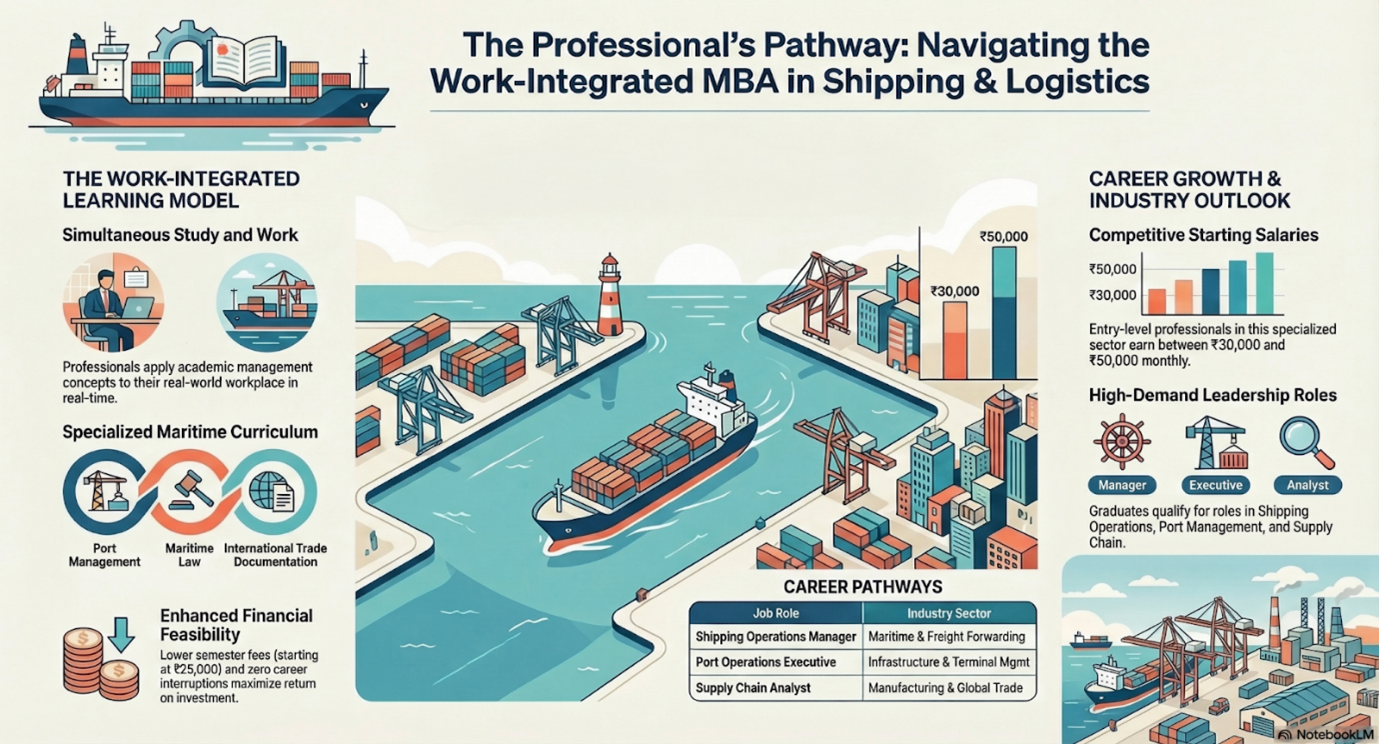
- Online MBA Fees: The online logistics MBA programme at AMET University costs Rs 25,000 per Semester, which is lower than the tuition costs for full-time residential programmes.
- Work-Integrated MBA Advantage: Work-integrated programmes allow professionals to continue earning while studying, reducing financial pressure associated with career breaks.
- Return on Investment: The ROI of logistics education often depends on career progression within supply chain industries, where experienced professionals can move into managerial and strategic roles.
Key Takeaway: Work-integrated learning improves the financial feasibility of postgraduate education by allowing professionals to maintain income during their studies.
MBA Shipping & Logistics Salary in India (2025–2028)
As India expands its logistics infrastructure and global trade participation, demand for logistics professionals continues to grow.
Typical salary ranges in the sector vary depending on experience and role.
- Fresher Salaries: Entry-level roles in logistics and shipping management may offer monthly salaries ranging from ₹30,000 to ₹50,000, depending on the organisation and responsibilities.
- Mid-Level Roles: Professionals with several years of experience often move into operational management roles with higher compensation and leadership responsibilities.
- Senior Roles: Senior professionals overseeing logistics operations, supply chain strategy, or port management often command significantly higher salary packages.
- Chennai vs Other Cities: Cities with strong maritime and logistics ecosystems, such as Chennai, may offer broader career opportunities due to proximity to ports and trade networks.
Key Takeaway: Salary progression in logistics management correlates with experience, specialisation, and geographic location within India's trade hubs.
Job Roles After an MBA in Shipping & Logistics
Graduates from logistics management programmes may pursue diverse roles across industries connected to trade, transportation, and supply chain operations.
Common job roles include:
- Shipping Operations Manager
- Port Operations Executive
- Supply Chain Analyst
- Logistics Manager
- Import and Export Manager
- Maritime Business Consultant
These roles exist across shipping companies, freight forwarding firms, manufacturing organisations, and international trading businesses.
MBA in Port & Shipping Management Salary
Port and shipping management careers are closely linked to global trade expansion.
- Entry-Level Opportunities: Early-career professionals often begin in operational roles related to cargo handling, logistics coordination, or shipping documentation.
- Growth in Port-Led Economies: Government initiatives focused on port-led development are expanding maritime infrastructure, creating new opportunities for logistics professionals.
- Public and Private Sector Opportunities: Ports operated by public authorities as well as private logistics companies provide employment across operational, managerial, and strategic functions.
MBA with Internship – Why Internships Matter in Logistics
Internships play an important role in logistics education because the industry relies heavily on practical coordination and operational expertise.
- Industry Exposure: Internships allow learners to understand how shipping companies, logistics providers, and freight operators function in real environments.
- Placement Conversion: Many organisations evaluate interns for potential full-time roles, making internships a valuable entry point into logistics careers.
- Skill Validation: Practical exposure allows students to test their knowledge of supply chain systems, operations management, and trade documentation.
Key Takeaway: Internship-integrated programmes allow learners to translate academic learning into practical workplace understanding.
MBA Internship in Chennai – Do MBA Students Get a Stipend?
Internship experiences vary depending on the organisation and role.
- Paid and Unpaid Internships: Some logistics companies offer paid internships, while others provide training-focused roles without stipends.
- Average Internship Stipends: In many cases, MBA interns in logistics and supply chain roles may receive stipends depending on company policies and responsibilities.
- Shipping and Logistics Sector Internships: Organisations involved in freight forwarding, shipping operations, and port logistics frequently engage interns to assist with operational processes and documentation.
Work Integrated MBA – Study and Work Together
A work-integrated MBA allows professionals to pursue higher education while continuing their employment.
This learning format integrates academic coursework with ongoing professional experience, allowing learners to apply theoretical knowledge directly in their workplace.
Such programmes are particularly valuable for:
- working professionals seeking career growth
- individuals exploring career transitions within logistics sectors
- professionals aiming to combine income generation with academic advancement
Learning Format Classification
The work-integrated MBA follows a Work-linked / Apprenticeship learning model, where employment and academic learning progress simultaneously.
Key Takeaway: Work-integrated education transforms the workplace into a learning environment where management concepts are applied in real time.
Why Choose AUOL for an MBA in Shipping & Logistics
The online MBA programmes offered through AMET University Online aim to combine domain expertise with flexible learning pathways.
Several aspects make the programme relevant for logistics professionals:
- Industry-aligned curriculum covering shipping and logistics systems
- Internship and industry exposure opportunities
- Online learning is suitable for working professionals
- Academic focus connected to Chennai's maritime ecosystem
Admission Process and Eligibility
Eligibility
Applicants typically need to hold a recognised undergraduate degree in any discipline to apply for MBA programmes.
Application Steps
The general application process includes:
- Completing the online application form
- Uploading required academic documents
- Submitting the application fee
- Receiving confirmation from the institution
Final Thoughts – Is an MBA in Shipping & Logistics Worth It?
As global trade networks continue expanding, the logistics industry requires professionals who understand supply chains, shipping operations, and international trade systems.
For individuals already working in logistics or related sectors, a work-integrated MBA offers an opportunity to strengthen managerial capabilities while continuing professional growth.
Rather than pausing their careers, professionals can develop strategic knowledge and industry expertise simultaneously — positioning themselves for leadership roles in the evolving logistics ecosystem.
Final Takeaway: The future belongs to professionals who can combine strategic management with sector-specific expertise — and AMET University Online MBA is designed to bridge that gap.
Contact Us to Make a Confident Career Choice
Connect NowFrequently Asked Questions
Chennai's strong maritime infrastructure and port ecosystem create significant opportunities for professionals specialising in shipping and logistics management.
Entry-level roles typically start around ₹30,000–₹50,000 per month, with higher salaries possible as professionals gain experience and move into managerial positions.
Some logistics companies offer stipends for interns, while others provide training-based internships without financial compensation.
Online MBA programmes offered by recognised universities follow academic frameworks aligned with higher education regulations.
A work-integrated MBA allows professionals to pursue postgraduate education while continuing their employment.
Specialised programmes focusing on logistics, maritime management, and supply chain systems are often preferred for careers in these sectors.
Graduates may pursue roles such as logistics manager, supply chain analyst, shipping operations manager, or export–import manager.
With India expanding its logistics infrastructure and international trade capabilities, specialised management education in logistics can offer valuable career opportunities.


